
Dispatch · July 19, 2026 · 6 min · By Annika Falkenrath
Mineral vs chemical sunscreen: how to choose
Both prevent burns when you use them right. What actually separates the two, and which one fits your skin, your day, and your situation.
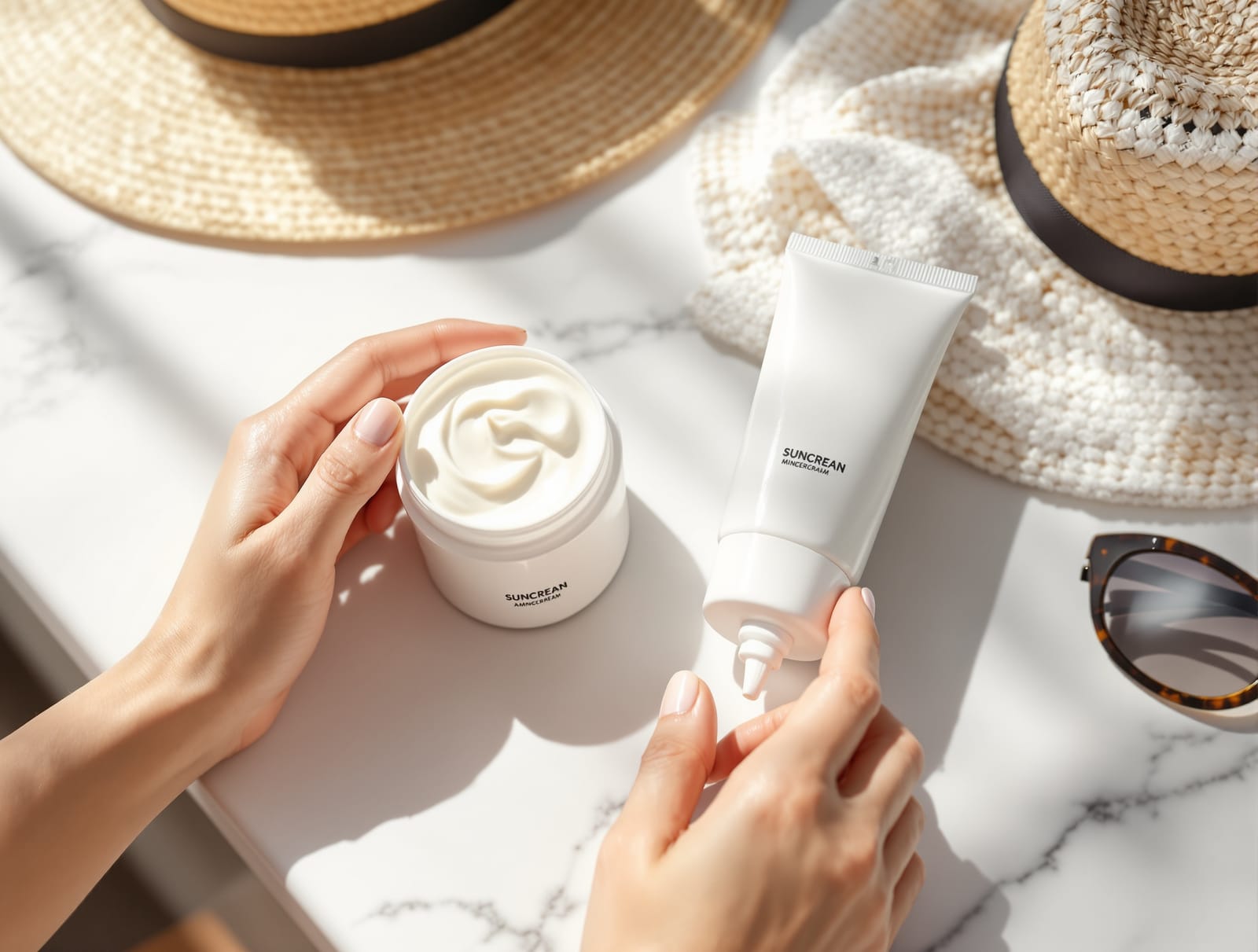
Stand in the sunscreen aisle for a minute and the labels split into two camps: mineral (also called physical) and chemical. The internet has turned that split into a moral contest, with each side sure the other is either useless or dangerous. The calmer truth is that both types, used correctly, prevent sunburn and the cumulative damage behind skin cancer risk. The differences that actually matter are about ingredients, feel, and fit, not about one being real sun protection and the other being a scam.
What sets them apart
Mineral sunscreens use one or both of two active ingredients, zinc oxide and titanium dioxide. They sit on top of the skin and work largely by scattering and absorbing ultraviolet light at the surface. Chemical sunscreens use carbon-based filters such as avobenzone, octinoxate, octisalate, homosalate, and octocrylene, which absorb ultraviolet energy and release it as a small amount of heat. Both approaches end at the same place: less ultraviolet radiation reaching the living cells below. The old shorthand that mineral filters reflect like a mirror while chemical filters absorb is a simplification, since mineral filters absorb a good deal of ultraviolet too, but the practical divide holds. One category is zinc and titanium, the other is the carbon-based filters.
How they feel and wear
This is where most people actually decide. Chemical sunscreens tend to be thin, lightweight, and nearly invisible, which makes them easy to layer under makeup and pleasant enough to wear every day, the single most important quality in any sunscreen, since the one you skip protects nothing. Their tradeoff is that they usually need about 15 minutes to bind before sun exposure, and some formulas sting if they migrate into the eyes. Mineral sunscreens work immediately on application and are less likely to irritate, but the classic complaint is the white cast, the pale or ashy film that zinc and titanium can leave, which shows up most on deeper skin tones. Modern tinted mineral formulas have largely solved that, blending into a range of complexions, a shift covered in can dark skin get sunburned. Mineral tends to be thicker and can need more effort to rub in evenly.
Safety, skin, and the questions people actually ask
The reassuring headline first: the U.S. Food and Drug Administration considers zinc oxide and titanium dioxide generally recognized as safe and effective, and it has asked manufacturers for more data on several of the chemical filters, not because they are known to be harmful but because they can be absorbed into the bloodstream and the long-term significance of that is still being studied. The agency is clear that the proven risks of unprotected sun exposure are real and the theoretical questions about filters are not a reason to skip sunscreen (see the FDA's plain-language overview at fda.gov). For most people the choice comes down to skin and setting rather than safety. Sensitive, acne-prone, rosacea-prone, or eczema-prone skin often does better with gentle mineral formulas. Very fair skin, young children, and anyone whose skin reacts easily are common reasons dermatologists lean mineral, since zinc and titanium rarely irritate. The American Academy of Dermatology takes the ecumenical position that the best sunscreen is simply one that is broad-spectrum, SPF 30 or higher, water-resistant, and that you will actually reapply (see the AAD's sunscreen FAQs at aad.org).
Reading the label the right way
Whatever camp you choose, three words on the front matter more than the mineral-versus-chemical debate. Broad-spectrum means the product is tested against UVA as well as the UVB that burns. SPF 30 or higher sets the floor for everyday use. Water-resistant, rated to either 40 or 80 minutes, tells you how long it holds up while swimming or sweating, after which you reapply. None of that changes with the filter type, and none of it works without enough product: roughly a shot-glass amount for the whole body, a reapplication every two hours outdoors, and more often after water or heavy sweat. Application technique protects your skin far more than the filter chemistry does, which is the same lesson behind a consistent daily routine for sun-prone skin and behind checking the UV index before you head out.
The takeaway
Mineral versus chemical is a real distinction, but it is not the contest the internet makes it. Reach for mineral if your skin is sensitive or reactive, if you want protection that works the moment it is on, or if it is going on a small child; reach for chemical if you want a light, invisible feel you will happily wear every single day. The wrong choice is the bottle that stays in the drawer. Pick the broad-spectrum SPF 30 formula you like enough to apply generously and reapply on schedule, and you have already made the decision that matters.
Related reading: A daily routine for sun-prone and sun-damaged skin and Protecting children from sun damage.